
The Thai tapioca industry is expected to focus on tapioca flour exports and Asian markets as part of its growth strategy over the next five years. Industry representatives believe that the value of Thailand’s tapioca exports could reach 100 billion baht as demand for cassava-based products continues to expand.
The strategy reflects Thailand’s effort to strengthen the value of its cassava industry by placing greater emphasis on processed tapioca products, particularly flour. At the same time, the growing demand for cassava as a feedstock for ethanol production is expected to increase competition for domestic cassava roots.
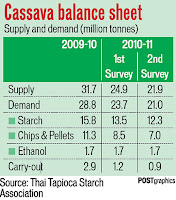
The Commerce Ministry projected that by 2016, domestic demand for cassava roots for ethanol production could surge to 13 million tonnes. Meanwhile, exports could exceed 22.5 million tonnes, bringing total demand to approximately 35.5 million tonnes. This would represent an increase of around 42% from the production level at the time.
Thailand to Focus More on Tapioca Flour Exports
Speaking at the World Tapioca Conference 2011, Yanyong Phuangrach, the permanent secretary of Thailand’s Commerce Ministry, said the country should place greater emphasis on exporting tapioca flour.
The shift was intended to compensate for a potential reduction in exports of tapioca chips and pellets. By increasing flour exports, Thailand could strengthen its position in markets that require more processed cassava products.
The proportion of tapioca flour in Thailand’s exports was expected to increase from 51% to 65%. Tapioca chips and pellets would account for the remaining share.
Improving the Quality and Image of Thai Tapioca
Increasing export volumes alone would not be enough to strengthen Thailand’s position in the international tapioca market. The country also needed to maintain a strong image and ensure that its tapioca flour and other products met accepted quality standards.
Yanyong emphasized the importance of building confidence among importers, buyers, and domestic consumers. Consistent standards and reliable product quality are particularly important for tapioca flour because industrial users often require products with specific and consistent characteristics.
A strong reputation for quality could therefore help Thai exporters maintain their competitiveness and develop long-term relationships with international buyers.
Expanding Tapioca Markets in Asia
Thai exporters were also encouraged to expand into promising Asian markets, particularly China, India, and Indonesia.
Focusing on Asian markets could provide several advantages. In addition to strong regional demand, relatively shorter shipping distances could help exporters reduce transportation and insurance costs.
However, expanding into these markets would also require Thai exporters to maintain consistent flour quality and meet the requirements of individual buyers and markets.
Tapioca Flour Has Wide Industrial Potential
Pramote Kongthong, president of the North Eastern Tapioca Trade Association, shared the view that tapioca flour has strong potential in food, energy, and other industries.
The wide range of potential applications makes tapioca flour an important product for the future development of Thailand’s cassava industry.
- Food industry – tapioca flour can be used as an ingredient in various food products.
- Energy industry – cassava can be processed as a raw material for ethanol production.
- Other industries – cassava starch and its derivatives can be used for a variety of industrial applications.
This potential was reflected in increasing investment in tapioca flour factories, particularly facilities intended to supply major customers in China and India.
Investment in Tapioca Flour Processing
Investment in tapioca flour factories was increasing as Thailand sought to meet demand from major international customers. China and India were among the key markets driving interest in additional flour-processing capacity.
Greater processing capacity would allow more cassava to be converted into higher-value products before being exported. This supports the industry’s broader strategy of increasing the share of tapioca flour in total exports.
Cassava as a Major Economic Crop in Thailand
Tapioca is an important economic crop for Thailand. The industry provides employment and income for more than 500,000 families and is supported by approximately 6.5 million to 7 million rai of plantation area.
The scale of the industry means that changes in cassava demand can have a significant impact not only on processors and exporters but also on farmers and communities involved in cassava production.
Growing demand from both export markets and the domestic ethanol industry therefore creates opportunities as well as challenges for Thailand’s cassava supply chain.
Thailand’s Annual Cassava Production
Thailand harvests approximately 20–25 million tonnes of cassava roots each year, according to the figures cited in the original report.
About 75% of the country’s cassava production is processed for export. This makes international demand an important factor in the performance of Thailand’s cassava industry.
At the same time, increasing domestic demand for cassava as an ethanol feedstock could change the balance between domestic consumption and export-oriented processing.
Thailand’s Tapioca Export Performance
The report stated that Thailand shipped approximately 7.27 million tonnes of tapioca products in the previous year. The total export value reached around US$2.15 billion, equivalent to approximately 68.3 billion baht.
The figure represented exports of all types of tapioca products rather than tapioca flour alone.
The strong export performance provided a basis for the industry’s confidence that tapioca exports could continue growing in the following years.
Projected Export Value of Tapioca Products
Seree Denworalak, president of the Thai Tapioca Traders Association, said tapioca exports for the year were projected to reach approximately 73 billion baht.
Of this amount, around 44 billion baht was expected to come from tapioca flour exports.
Pramote Kongthong was confident that Thailand’s total tapioca exports could exceed 100 billion baht within the following five years.
The projection demonstrated the industry’s expectations for continued growth in processed tapioca products, particularly flour.
Growing Demand from Ethanol Production
One of the factors expected to influence Thailand’s cassava industry was the growing use of cassava roots for ethanol production.
The Commerce Ministry projected that domestic demand for cassava roots for ethanol could reach 13 million tonnes by 2016. This would represent a significant additional demand for cassava alongside the country’s export requirements.
The development of the ethanol industry therefore had the potential to create another important market for cassava farmers while also increasing competition for raw materials among different sectors.
Challenges for Thailand’s Tapioca Industry
Despite the positive export outlook, Thailand’s tapioca industry still faced challenges related to raw material availability and production levels.
The export projections could change depending on the actual volume of cassava roots available. The report noted that the figures could be revised after a survey of cassava root production in September.
This highlights the importance of accurate production data when determining export capacity and domestic supply requirements.
Thailand’s Tapioca Industry Growth Strategy
The strategy described in the report can be summarized into several key priorities:
- Increase tapioca flour exports to raise the share of higher-value processed products.
- Reduce reliance on tapioca chips and pellets as the industry expands its flour exports.
- Maintain product quality and standards to strengthen buyer confidence.
- Build a stronger international image for Thai tapioca products.
- Expand Asian markets, particularly China, India, and Indonesia.
- Increase investment in flour-processing factories to meet demand from major customers.
- Manage cassava supplies carefully as domestic ethanol demand increases alongside export demand.
Key Takeaways
- Thailand planned to make tapioca flour a larger part of its export strategy.
- The share of flour exports was expected to rise from 51% to 65%.
- China, India, and Indonesia were identified as promising Asian markets.
- Tapioca flour has potential applications in food, energy, and other industries.
- More investment was being made in tapioca flour factories, particularly to supply China and India.
- The tapioca industry supported more than 500,000 families according to the report.
- Thailand’s cassava plantation area was approximately 6.5–7 million rai.
- Annual cassava harvests were estimated at around 20–25 million tonnes.
- Approximately 75% of cassava production was processed for export.
- Thailand exported about 7.27 million tonnes of tapioca products worth US$2.15 billion in the previous year cited in the report.
- Tapioca exports were projected at approximately 73 billion baht for the year discussed.
- Tapioca flour was expected to account for around 44 billion baht of those exports.
- The industry expected total tapioca exports to exceed 100 billion baht within five years.
- Rising domestic demand for cassava-based ethanol was expected to become an increasingly important factor in the cassava market.
Conclusion
The Thai tapioca industry was preparing for continued growth by placing greater emphasis on tapioca flour exports and expanding into major Asian markets. The strategy represented an effort to increase the value of cassava by processing more of the crop into higher-value products.
China, India, and Indonesia were identified as promising markets, while maintaining quality standards and strengthening the reputation of Thai tapioca products were considered essential for gaining the confidence of international buyers.
At the same time, Thailand’s large cassava production base provided substantial support for the industry. With millions of rai dedicated to cassava cultivation and more than 500,000 families depending on the sector, cassava remained an important economic crop.
However, the expected increase in domestic cassava demand for ethanol production could create additional pressure on raw material supplies. Balancing domestic consumption with export requirements would therefore become increasingly important as the industry expanded.
Overall, the development of tapioca flour exports, investment in processing facilities, expansion into Asian markets, and growth in cassava-based ethanol production all demonstrated the broader potential of Thailand’s cassava industry. The future growth of the sector would depend on maintaining sufficient raw material supplies while continuing to improve the quality and value of cassava-based products.
FAQ
What is Thailand’s tapioca industry focusing on?
The industry is focusing on increasing tapioca flour exports and expanding into promising Asian markets as part of its growth strategy.
Which Asian markets are important for Thai tapioca?
China, India, and Indonesia are identified in the report as promising Asian markets for Thai tapioca products.
Why is Thailand increasing tapioca flour exports?
Thailand wants to increase the share of processed, higher-value tapioca products and compensate for a potential reduction in exports of tapioca chips and pellets.
What percentage of tapioca exports was expected to come from flour?
The proportion of flour exports was expected to increase from 51% to 65%.
How much cassava does Thailand harvest each year?
The report states that Thailand harvests approximately 20–25 million tonnes of cassava roots each year.
How much of Thailand’s cassava production is processed for export?
Approximately 75% of Thailand’s cassava production was reported to be processed for export.
How much were Thailand’s tapioca exports worth?
The report stated that Thailand shipped approximately 7.27 million tonnes of tapioca products worth US$2.15 billion, or about 68.3 billion baht, in the previous year cited.
What was the projected value of tapioca exports?
Tapioca exports were projected at approximately 73 billion baht, including around 44 billion baht from tapioca flour.
Could Thailand’s tapioca exports reach 100 billion baht?
Industry representatives were confident that Thailand’s tapioca exports could exceed 100 billion baht within five years.
How could ethanol production affect Thailand’s cassava industry?
Growing ethanol production could significantly increase domestic demand for cassava roots. The Commerce Ministry projected domestic cassava demand for ethanol production could reach 13 million tonnes by 2016.